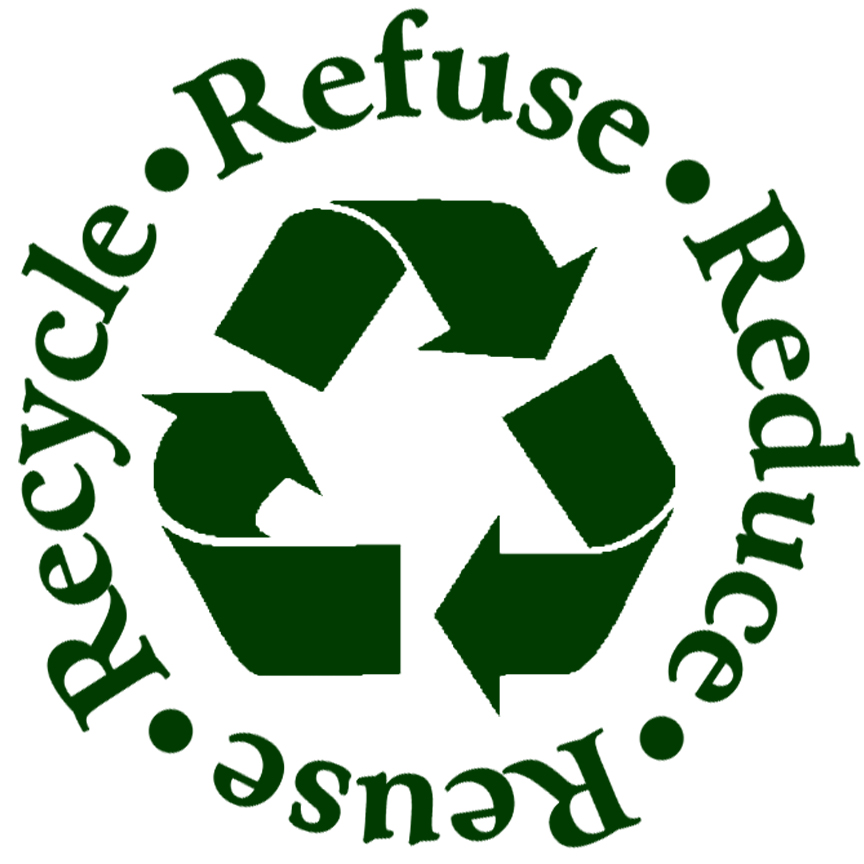
Recycling is one of the extremely popular ideas in the environment or sustainability domain. Who has not come across the nearly ubiquitous “Please recycle” exhortation? At first glance, and maybe even at repeated glances, it may seem like such a good idea – we should recycle the matter that we have used than to produce more of it from scratch. Recycle plastics, glass, aluminium, or paper than do more extraction from precious natural resources, such as mines and trees.
Source: https://www.livesmallridefree.com/blog/the-fourth-r-of-recycling
But what kind of behaviour does the idea of recycling encourage? Do we start feeling more comfortable reaching out for a plastic bottle of packaged drinking water, thinking that it would be recycled anyways (and thus it is not an environmental problem), than using water from a tap or jug, possibly available in the same room? Do we start thinking that there is no problem in using more plastics (or any other recyclable item) once we think that it can be recycled?
The operative word here is “can,” and can is not the same as “will” or “would.” The challenges, or problems if you prefer, with recycling include these:
- The cost of recycling
- The extent of actual recycling (which is usually very low) compared to the promise or assumption of full (or nearly-full) recycling
- Energy-intensive recycling process and associated transportation
- Infrastructure (plants) needed for recycling, their location and cost-effectiveness
- Collection of used materials, or reverse-logistics challenges and limitations
- Loss of material in the process of recycling
- Lower quality of recycled resource as compared to the original resource
- Engineering limits to number of iterations of recycling
- Many non-recyclable items (including very popular and commonly used packaging items) that seem like recyclable but are actually not recyclable (these are collected as dry waste items but not recyclable)
These massive hurdles in the path of recycling make recycling a much worse option for the environment than the other R’s in in 4R’s of Refuse, Reduce, Reuse (or Repurpose) and Recycle.

These hurdles detract from the seemingly vast potential that comes to our mind when we first encounter “Please recycle”. Once we know the ground reality of recycling, recycle typically emerges as a poor choice when three other R’s (Refuse, Reduce, Reuse/Repurpose) do so much better than the 4th R of Recycle.
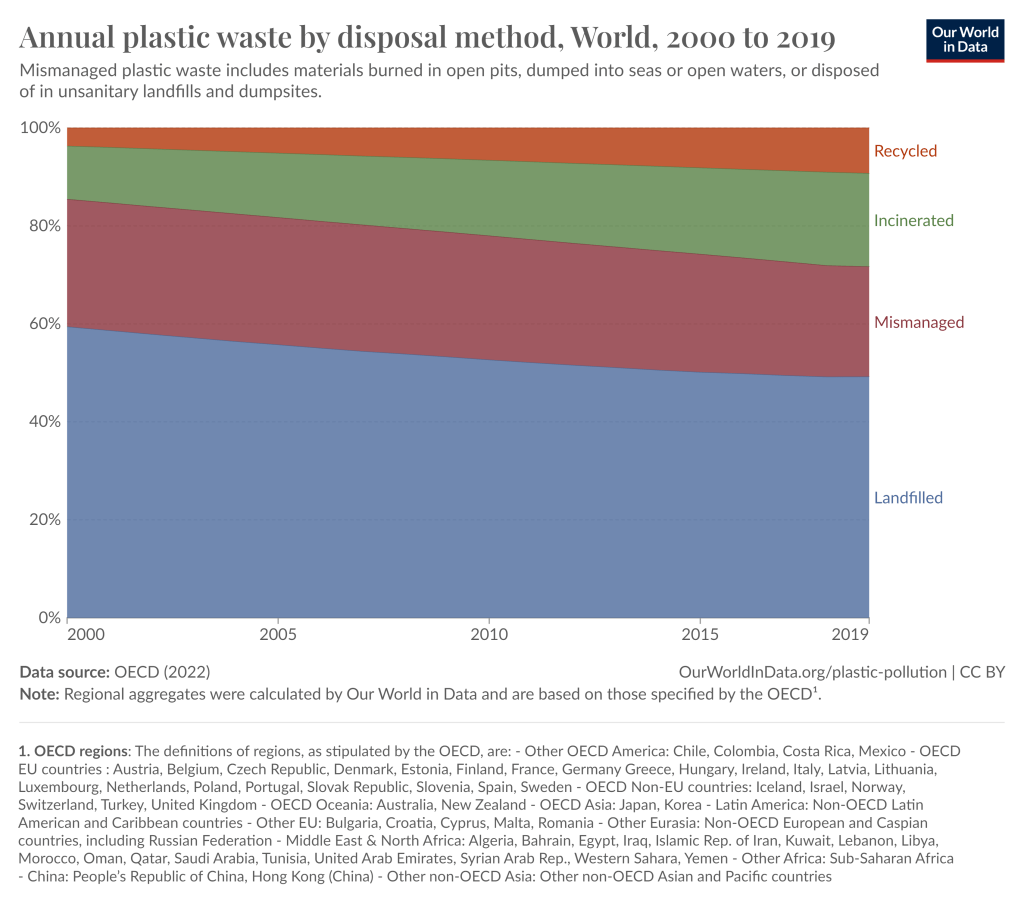
For example, only 9% of the plastic produced so far has been recycled so far. So where does the rest of plastic and other items meant to be recycled end up after use? Often these waste items are burnt, sometimes in a controlled environment for production of energy, but more often simply burnt. Some are sent to landfills or open waste collection dump yards polluting the soil, water, and air.
So, Please Recycle? Wouldn’t you rather Refuse the product in the first place?
Notes and Bibliography:
“Is Recycling Really the Answer to the Plastic Crisis? – DW – 01/11/2024.” Accessed June 3, 2024. https://www.dw.com/en/is-recycling-really-the-answer-to-the-plastic-crisis/audio-67950470.
Policy discourse often leaves out environmental and social costs of recycling and waste management, as in this article. Kinnaman, Thomas C. “Policy Watch: Examining the Justification for Residential Recycling.” Journal of Economic Perspectives 20, no. 4 (August 1, 2006): 219–32. https://doi.org/10.1257/jep.20.4.219.
Hopewell, Jefferson, Robert Dvorak, and Edward Kosior. “Plastics Recycling: Challenges and Opportunities.” Philosophical Transactions of the Royal Society B: Biological Sciences 364, no. 1526 (July 27, 2009): 2115–26. https://doi.org/10.1098/rstb.2008.0311.
Shen, Li, and Ernst Worrell. “Chapter 31 – Plastic Recycling.” In Handbook of Recycling (Second Edition), edited by Christina Meskers, Ernst Worrell, and Markus A. Reuter, 497–510. Elsevier, 2024. https://doi.org/10.1016/B978-0-323-85514-3.00014-2.
Nattagh, Leila. “Reduce, Reuse, and Recycle Are Not Enough.” Accessed June 3, 2024. https://www.w2rsolutions.com/post/5rs-hierarchy.
Why aren’t we recycling more plastic? https://stories.undp.org/why-arent-we-recycling-more-plastic
https://ourworldindata.org/plastic-pollution
https://en.wikipedia.org/wiki/Recycling#
 Environment & Human Behaviour
6 responses to “The myth of recycling”
Apart from the points mentioned here and based on my experience of visiting a local (Halol, Gujarat – the hub of plastic manufacturing) recycling unit –
(1) Unsafe conditions for working, where workers don’t use any safety equipment to ward themselves from microplastics inhalation/ingestion
(2) Uncontrollable release of microplastics into soil, air, water during shredding of plastic for recycling
(3) Since this is a last leg process and is more of downcycling and has low $$ value, little of no priority is given for health and safety
Thank you for the sharing that insightful article!
LikeLike
Thank you for sharing your experience and insights, Aparna.
Yes, there are many more aspects than what is covered in this short article. The focus is to bust the myth around recycling and how it lulls us into needless use of more resources. Recycling hardly happens, and even when it happens, it is not a light process.
LikeLike
Another data point confirming the myth of recycling: only about half of lithium-ion batteries are recycled.
Visit https://www.sustainabilitybynumbers.com/p/battery-recycling-myth?utm_source=Live%2BAudience&utm_campaign=8477ef714e-nature-briefing-anthropocene-20240705&utm_medium=email&utm_term=0_b27a691814-8477ef714e-50884828&mc_cid=8477ef714e&mc_eid=b0eec0997f
But recycling can be increased, and in case of products like batteries, that may be the best option after the refuse option. Reuse and Repurpose may not be very meaningful or good options for batteries.
LikeLike
A new article on Sustainable Plastic Future, written by K N Ninan:
https://www.rural21.com/english/current-issue/detail/article/towards-a-sustainable-plastic-future.html
LikeLike
An interesting and important reminder that while recycling is not the first priority, it is important to do it if other options are exhausted. First refuse, then reduce, then resue and lastly recycle.
LikeLike
Here’s a comment I received today from Jenny Pinto (who does not have a wordpress login):
“a thought provoking post vivek. thank you.
to my mind, as long as our narrow focus is on compliance, these are bound to have limited success. the real issue is over consumption. the real issue is an economy that expects infinite growth. the real issue is that we dont consider the environmental costs of any things we produce or consume. that knowledge can only start with school education. how we learn science, geography, economics etc must change. a discussion too long to be had here but a worthwhile one to start. if you havent already, watch https://youtu.be/9GorqroigqM?si=sWLxHLAt3ST-316v ”
Thank you for sharing your views, Jenny. I tend to agree!
While this Story of Stuff Story comes from the USA, but since most of the world followed the USA/rich-people, we all have essentially the same issues (and solutions).
For further reading by readers of this blog comment, this is their website: https://www.storyofstuff.org/
Enjoy and practice/act!
LikeLike