
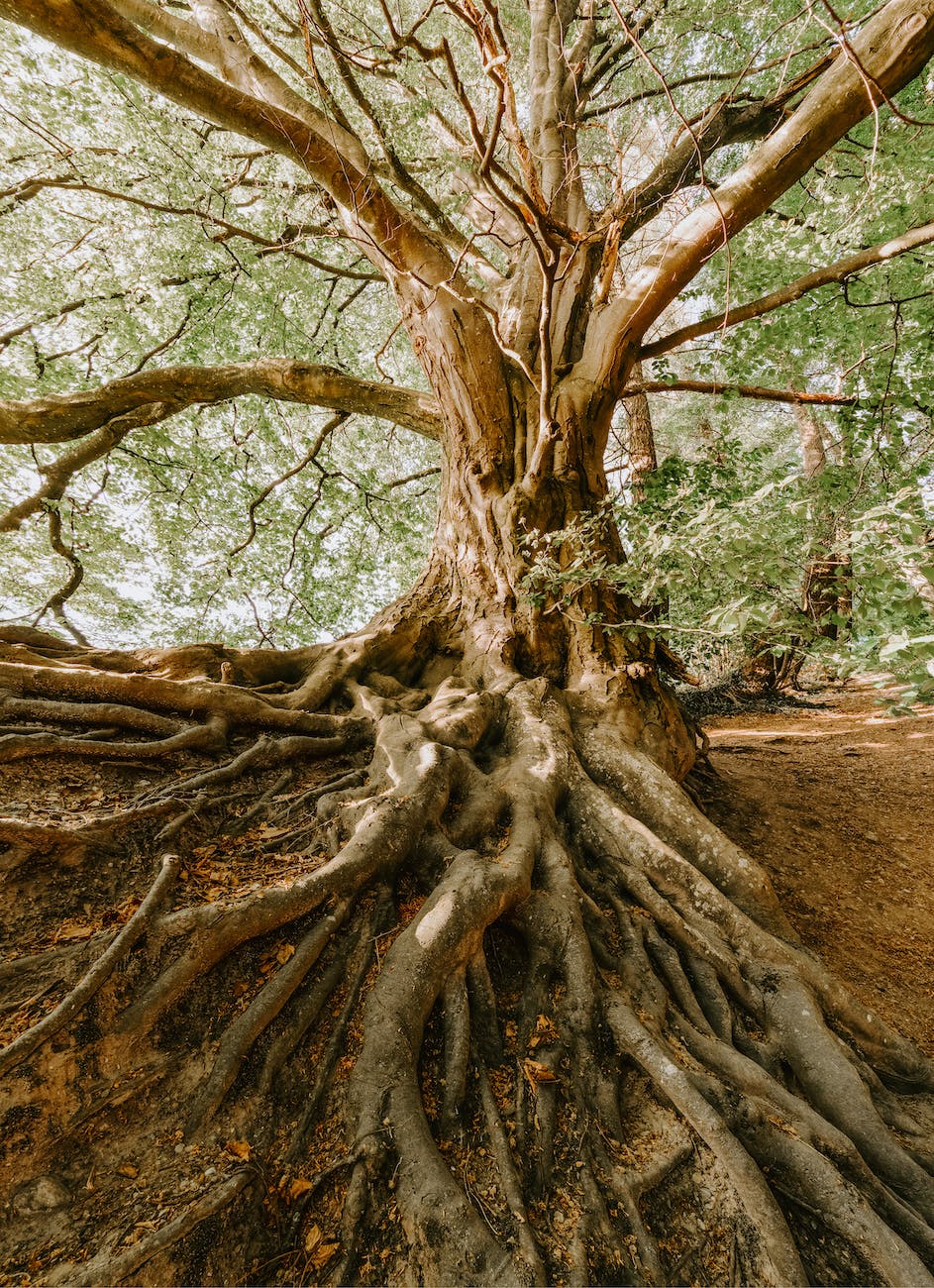
Is that really in doubt! But humour me for a moment and consider this question:
Do you believe that plants are good for the environment?
A. Yes, always.
B. Yes, usually.
C. No, since plants require water and other scarce resources.
D. Usually no, given the enormous resources poured into plants through human activities (pumped water, use of factory-made fertilizers, machines used for farming, travel and transport associated with the activity, handling of dead leaves and branches, processing of the produce, long-distance trade of the produce…), plants grown by humans these days are usually problematic for the environment.
That last point pretty much gives away the answer (1, 2). Devoid of humans, plants are very helpful to address the issue of excessive greenhouse gases on earth. But when it comes to plants grown by us (humans), especially prevalent agricultural practices, these days plants almost always have a large negative impact on the environment (3).

It is not just the typical large farms that are problematic. Even gardens are not very different, given intensive use of industrial resources and how we obstruct the natural growth of plants. To give a personal example, I was shocked to find that in my neighbourhood every house is sending out more than a kg of garden refuse per day! All the manicured green spaces around my neighbourhood are not really doing a great service to my city’s environment. While the space may look nice, there is also a huge downside to the environment, especially given that we keep pruning them and mowing the grass. Worse, we use highly polluting trucks to shift all that garden “waste” out of sight as we do not have space to compost it locally. Further, there are hardly any fruit trees around homes. We have mainly show-trees, worse many exotic species like lantana that please our pursuit of novelty and problematic fashions in gardening.
Damage to water pipes is another challenge associated with trees in cities. There are growing conflicts between tree roots and water pipes in my neighbourhood and city, and possibly in most cities. There is frequent leakage of fresh water, often undetected to start with, and embedded wastage of energy used to pump the water. Damage to sewage pipes is another recurring issue. Coexistence of underground utility network and trees is not very easy to achieve (4, 5). Planning for trees during the design stage of a neighbourhood is clearly preferred (6, 7).
Going back to growing more trees, even tree plantation drives can be a problem to the environment, as noted by many researchers (8, 9). The issue of non-native species is relatively well-known by now; they pose risks (e.g., destruction of local species) and some require a very high level of resources (10). The environmental issues with even seemingly innovative plantation drives can include loss of bio-diversity, e.g., through replacement of natural thriving scrub land with a misplaced tree forest (2).
Apart from the carbon footprint of farming, the adverse effects of farming include chemical pollution affecting water, air and soil (3). Natural ways of farming provide a safer approach but the transition from current methods has many challenges (11).
But it is not as if trees planted by humans are always problematic for the environment. It is just that there are some key factors to keep in mind when doing so, such as choice of trees, their location and amount of resources that are used. Trees can play a large role in restoring a higher-level of stability of weather patterns. If done correctly, there are many benefits to humans, even in cities (12).

Bibliography
1. F. Fleischman, et al., Pitfalls of Tree Planting Show Why We Need People-Centered Natural Climate Solutions. BioScience 70, 947–950 (2020).
2. D. Adam, Massive tree planting efforts on drylands can actually cause more warming (2022) https:/doi.org/10.1073/journal-club.a4b9bae5-b2f7-4fd9-9492-f462e20729e0 (October 14, 2022).
3. V. P. Aneja, W. H. Schlesinger, J. W. Erisman, Farming pollution. Nature Geosci 1, 409–411 (2008).
4. S. Pauleit, Urban street tree plantings: identifying the key requirements. Proceedings of the Institution of Civil Engineers – Municipal Engineer 156, 43–50 (2003).
5. Landscaping Network, 5 Planting Mistakes – Avoid Damage to Utilities, Pipes, Etc. LandscapingNetwork.com (September 7, 2023).
6. D. Slater, R. Chalmers, Factors affecting the design coordination of trees and underground utilities in new developments in the UK. Arboricultural Journal 0, 1–22 (2020).
7. D. Nair, Landuse & Green Space. B.PAC (September 7, 2023).
8. K. Bäckstrand, E. Lövbrand, Planting Trees to Mitigate Climate Change: Contested Discourses of Ecological Modernization, Green Governmentality and Civic Environmentalism. Global Environmental Politics 6, 50–75 (2006).
9. C. Gramling, Why planting tons of trees isn’t enough to solve climate change. Science News (2021) (October 7, 2022).
10. P. Kumar Rai, J. S. Singh, Invasive alien plant species: Their impact on environment, ecosystem services and human health. Ecological Indicators 111, 106020 (2020).
11. P. R. Brown, et al., Enabling natural resource managers to self-assess their adaptive capacity. Agricultural Systems 103, 562–568 (2010).
12. The Nature Conservancy, 6 Ways Trees Benefit All of Us. The Nature Conservancy (2020) (September 4, 2023).
 Environment & Human Behaviour